
The Herb Cabinet 本草
五味子 wǔ wèi zǐ
Schisandra chinensis · schisandra berry
“The five-flavor berry — sour, sweet, bitter, pungent, and salty in one small fruit. The tradition gave it one job above all: to stop what is leaking.” — Lao Xinglin
What the tradition says
Taste one berry and you understand the name: five flavors at once, which the tradition read as a sign it touches all directions of treatment. Its core identity, though, is astringent — wu wei zi gathers in what the body is losing[1]. Chronic cough and wheeze where the lung qi scatters; spontaneous sweat and night sweat; leaking essence; daybreak diarrhea; and a scattered, dream-disturbed spirit that will not settle into sleep — all the classical indications are variations on one verb: contain[1]. It also "generates fluids," easing the thirst of depleted patients.
What the research says
Schisandra's lignans have drawn real laboratory interest — liver-protective and endurance effects in animal studies — but human trials remain limited, and no clinical use is established[2]. The best-documented human finding is pharmacological rather than therapeutic: schisandra meaningfully inhibits the liver enzymes CYP1A2 and CYP3A4/5 that metabolize many drugs, and has raised blood levels of the transplant drug tacrolimus in patients[2].
Where to be careful
- The drug-interaction berry. If you take medications metabolized by CYP3A4 or CYP1A2 — a long list that includes tacrolimus and many common prescriptions — schisandra can raise their levels; involve your clinician or skip it[2].
- Tradition withholds astringents when something should still come out: early coughs, new fevers, the beginning of an illness[1]. You don't lock the door mid-departure.
In the pharmacy
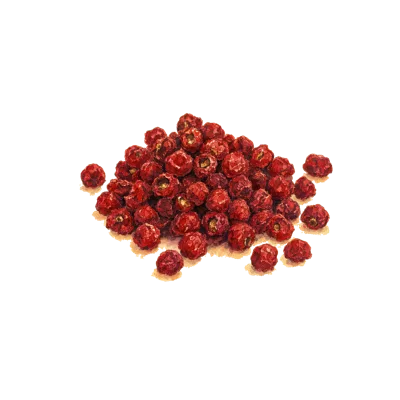
Small wrinkled red berries of Schisandra chinensis, from the vine the Chinese northeast calls its own. Sold dried whole, often simmered into teas; the sour hit is immediate and memorable.
References
- Bensky, Clavey & Stöger, Chinese Herbal Medicine: Materia Medica, 3rd ed., Eastland Press, 2004. ↩
- Memorial Sloan Kettering Cancer Center, "Schisandra" (About Herbs monograph). https://www.mskcc.org/cancer-care/integrative-medicine/herbs/schisandra ↩
Under the modern lens
Chemists have catalogued some 234 distinct compounds in wǔ wèi zǐ. The ones their papers return to most often:
Constituent records from SymMap v2.0 and TCMSP, retrieved August 2026 and checked by hand. A list of what's inside is a map, not a promise — chemistry alone doesn't prove an effect.
 Reviewed 2026-08-25