
The Herb Cabinet 本草
人参 rén shēn
Panax ginseng · Asian ginseng
“The emperor of tonics — when the qi itself is exhausted, this is the root the tradition reaches for. Handle it with respect; emperors are not for every day.” — Lao Xinglin
What the tradition says
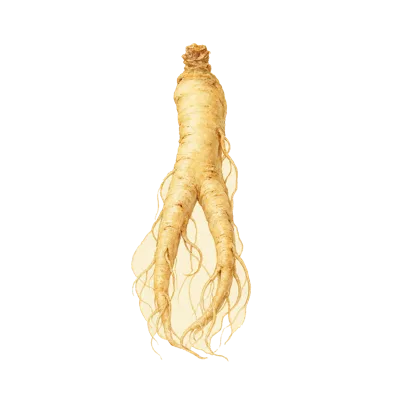
The name means "man-root" — the forked root really can look like a little person, and the tradition treats it with matching seriousness. Ren shen is the classic qi tonic: the herb for genuine depletion, when the vital energy is exhausted at its source[1]. The old indications are dramatic — collapse, desperate weakness, a pulse about to give out — and even in gentler use it anchors the great restorative formulas, where it strengthens the spleen and lung, generates fluids, and calms the spirit[1].
A point the tradition insists on: ginseng is for deficiency. Giving the emperor's tonic to someone young, robust, and merely tired was considered poor medicine — the classical texts pair it with warnings about misuse.
What the research says
Ginseng may be the most-studied herb in the pharmacopoeia, and the honest summary is still "modest and mixed." The NIH's center for complementary medicine notes possible small benefits for cognitive performance and for erectile dysfunction, while most studies of athletic performance show no effect[2]. Short-term use in recommended amounts appears safe for most people; the open questions are about long-term use[2].
Where to be careful
- Insomnia is the most commonly reported side effect[2] — fitting, for a stimulating tonic.
- Long-term safety and use in pregnancy or breastfeeding are not established[2].
- Traditional practice avoids combining it with certain herbs and considers it wrong for heat conditions[1] — one more reason this is an herb to use with a practitioner, not a supplement to stack.
In the pharmacy
The dried root of Panax ginseng, graded obsessively by age, origin, and preparation: white (dried) versus red (steamed), field-grown versus the near-mythical wild root. American ginseng (Panax quinquefolius, 西洋参) is a related but deliberately different medicine — cooler, moistening — and the tradition does not treat them as interchangeable[1].
References
- Bensky, Clavey & Stöger, Chinese Herbal Medicine: Materia Medica, 3rd ed., Eastland Press, 2004. ↩
- National Center for Complementary and Integrative Health (NIH), "Asian Ginseng: Usefulness and Safety." https://www.nccih.nih.gov/health/asian-ginseng ↩
Under the modern lens
Chemists have catalogued some 1194 distinct compounds in rén shēn. The ones their papers return to most often:
Constituent records from SymMap v2.0 and TCMSP, retrieved August 2026 and checked by hand. A list of what's inside is a map, not a promise — chemistry alone doesn't prove an effect.
Used in formulas
- 归脾汤 Gui Pi Tang Restore the Spleen Decoction Deputy — powers the qi engine
- 四君子汤 Si Jun Zi Tang Four Gentlemen Decoction Chief — powerfully tonifies the qi
- 补中益气汤 Bu Zhong Yi Qi Tang Tonify the Middle and Augment the Qi Decoction Deputy — reinforces the source qi
 Reviewed 2026-08-25