
The Herb Cabinet 本草
葛根 gé gēn
Pueraria montana var. lobata · kudzu root
“In America it ate the South; in my cabinet it eases the neck. The vine nobody can kill is also the classic herb for stiff shoulders, thirst, and the morning after.” — Lao Xinglin
What the tradition says
Ge gen's oldest fame is anatomical: it "releases the muscle layer," especially the neck and upper back — the stiff nape of colds, fevers, and desk-bound tension, canonized in Ge Gen Tang nearly two millennia ago[1]. Its second gift is lifting: it raises the clear fluids and yang of the digestion, treating thirst in feverish and wasting-thirst conditions and the diarrhea of a middle that cannot hold things up[1]. Folk use added the hangover: kudzu-flower and root preparations for "resolving wine."
What the research says
Kudzu's isoflavones (puerarin, daidzin) made it a serious candidate for reducing alcohol intake — early small trials were promising, but a systematic review did not confirm the benefit[2]. Its estrogenic activity is real enough to drive the main cautions below. As a food starch, kudzu powder thickens soups across East Asia.
Where to be careful
- Hormone-sensitive cancers: avoid — kudzu shows estrogenic activity[2].
- Drug interactions: reported with tamoxifen, methotrexate, and diabetes medications[2].
- Case reports of kidney and liver problems exist, causation uncertain[2] — one more reason herbs deserve the same disclosure to your clinician as drugs.
In the pharmacy
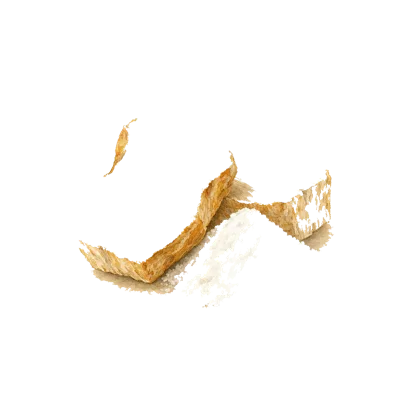
Heavy white slices or chalky lumps of Pueraria root, plus the fine white cooking starch. The tradition distinguishes wine-treated and raw forms; the American South distinguishes only "the vine that ate it."
References
- Bensky, Clavey & Stöger, Chinese Herbal Medicine: Materia Medica, 3rd ed., Eastland Press, 2004. ↩
- Memorial Sloan Kettering Cancer Center, "Kudzu" (About Herbs monograph). https://www.mskcc.org/cancer-care/integrative-medicine/herbs/kudzu ↩
Under the modern lens
Chemists have catalogued some 190 distinct compounds in gé gēn. The ones their papers return to most often:
Constituent records from SymMap v2.0 and TCMSP, retrieved August 2026 and checked by hand. A list of what's inside is a map, not a promise — chemistry alone doesn't prove an effect.
 Reviewed 2026-08-25