
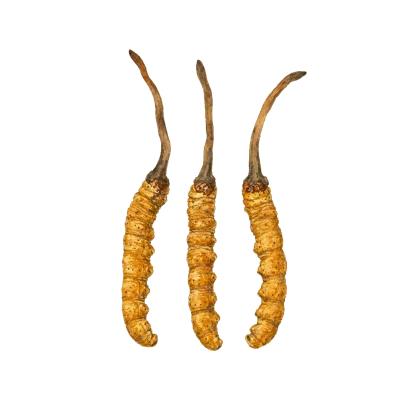
The Herb Cabinet 本草
冬虫夏草 dōng chóng xià cǎo
Ophiocordyceps sinensis · cordyceps, caterpillar fungus
“Winter worm, summer grass — the strangest drawer in my cabinet. A fungus that grows from a caterpillar, prized for steadying the breath and warming the kidneys.” — Lao Xinglin
What the tradition says
The name is a field report: winter worm, summer grass. A high-altitude fungus infects a ground-dwelling caterpillar, and by summer a slender stalk rises from it on the Tibetan plateau. The tradition classed this oddity as a gentle yang tonic for the lung and kidney pair — for chronic cough and wheeze, breathlessness on exertion (the kidneys "failing to grasp the qi," in the old phrase), weakness in the lower back and knees, and convalescence after long illness[1]. Mild enough to cook into a duck or chicken soup for the recovering — food-as-medicine at its most literal.
What the research says
Laboratory studies report immunostimulant and anti-tumor properties, and cordyceps has been tried as a supportive agent in kidney-transplant and hemodialysis patients — where the evidence remains insufficient to recommend it[2]. Athletic-performance claims lean on the vigor folklore more than on trials. Note that nearly all commercial "cordyceps" is the cultivated species Cordyceps militaris or fermented mycelium — the wild caterpillar fungus is astronomically expensive and heavily harvested.
Where to be careful
- Diabetes medication: cordyceps can lower blood sugar and may compound glucose-lowering drugs[2].
- Anticoagulants: it may increase bleeding risk with drugs like warfarin — a case of excessive post-extraction bleeding is on record[2].
- Immunosuppressants: an immune-stimulating fungus is a poor companion for drugs meant to quiet the immune system — clinician territory[2].
In the pharmacy
Wild pairs — caterpillar and stalk intact — sell by the gram like precious metal; the practical market is cultivated powder and capsules. The tradition simmered it whole into tonic soups, often with meat, for weeks of gentle rebuilding.
References
- Bensky, Clavey & Stöger, Chinese Herbal Medicine: Materia Medica, 3rd ed., Eastland Press, 2004. ↩
- Memorial Sloan Kettering Cancer Center, "Cordyceps" (About Herbs monograph). https://www.mskcc.org/cancer-care/integrative-medicine/herbs/cordyceps ↩
Under the modern lens
Chemists have catalogued some 416 distinct compounds in dōng chóng xià cǎo. The ones their papers return to most often:
Constituent records from SymMap v2.0 and TCMSP, retrieved August 2026 and checked by hand. A list of what's inside is a map, not a promise — chemistry alone doesn't prove an effect.
 Reviewed 2026-08-25