
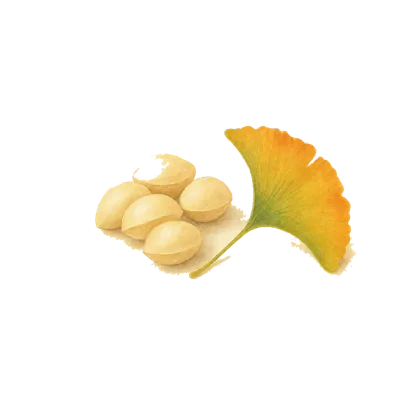
The Herb Cabinet 本草
白果 bái guǒ
Ginkgo biloba · ginkgo nut / ginkgo leaf
“The oldest tree on Earth keeps two medicines — my tradition used the nut for wheezing; yours brews the leaf for memory. Both deserve their fine print.” — Lao Xinglin
What the tradition says
The ginkgo predates the dinosaurs' extinction; a specimen outside an old temple may predate the temple. Classical medicine used the nut — bai guo, the "white fruit" — not the leaf: an astringent for the lungs (chronic wheeze and cough) and for things leaking below — vaginal discharge, dribbling urine[1]. Roasted, in small numbers, because the tradition knew perfectly well the seed was mildly toxic and said so in its own dosage warnings[1].
What the research says
The modern celebrity is the leaf extract, a European invention the tradition never brewed. Its flagship claim fell to good science: the large GEM trial found ginkgo extract did not prevent dementia versus placebo, and evidence for sharpening healthy memories remains inconclusive and low-quality[2]. Circulation-related uses have similarly mixed support. Few herbs have been tested this thoroughly and delivered this little.
Where to be careful
- The seeds are genuinely toxic eaten fresh, and even roasted seeds have caused serious poisoning in quantity — the tradition's small roasted doses were the safety margin[1][2]. Keep them from children.
- Leaf extract + blood thinners raises bleeding risk[2].
- Otherwise, moderate doses of standardized leaf extract are well tolerated (dizziness and headache lead the complaint list)[2].
In the pharmacy
Two products, one tree: shelled ginkgo nuts — pale, waxy, faintly sweet, roasted into congee and stuffing across East Asia — and Western standardized leaf extracts in bottles. This page mostly exists so the two stop being confused for each other.
References
- Bensky, Clavey & Stöger, Chinese Herbal Medicine: Materia Medica, 3rd ed., Eastland Press, 2004. ↩
- National Center for Complementary and Integrative Health (NIH), "Ginkgo: Usefulness and Safety." https://www.nccih.nih.gov/health/ginkgo ↩
Under the modern lens
Chemists have catalogued some 233 distinct compounds in bái guǒ. The ones their papers return to most often:
Constituent records from SymMap v2.0 and TCMSP, retrieved August 2026 and checked by hand. A list of what's inside is a map, not a promise — chemistry alone doesn't prove an effect.
 Reviewed 2026-08-25